
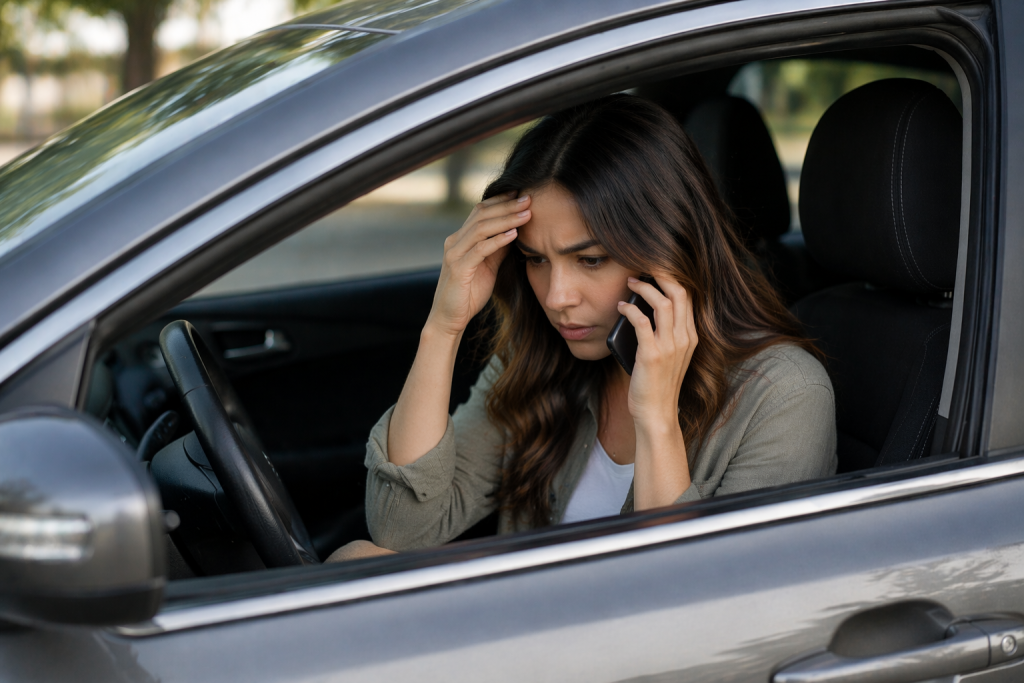
Uninsured motorist coverage helps protect you when another driver causes an accident but does not have car insurance. Depending on your state and policy, it may help pay for injuries, medical bills, lost wages, and sometimes damage to your vehicle after an accident with an uninsured driver.
Underinsured motorist coverage is closely related, but it is not exactly the same. It can help when the at-fault driver has insurance, but their liability limits are too low to cover the full cost of the accident.
This guide explains what uninsured motorist coverage is, how it works, what it may cover, how it differs from underinsured motorist coverage, and when adding it to your policy can make sense.
What Is Uninsured Motorist Coverage?
Uninsured motorist coverage, often called UM coverage, is a type of auto insurance that may help protect you if you are hit by a driver who has no insurance. It is designed to step in when the at-fault driver should have had liability insurance but does not.
Without this coverage, you may have to rely on your health insurance, collision coverage, personal savings, or legal action to recover costs after an accident with an uninsured driver. That can be stressful, slow, and expensive.
Uninsured motorist coverage is not the same as liability insurance. Liability insurance helps pay for injuries or damage you cause to other people. Uninsured motorist coverage helps protect you when another driver causes the accident and cannot pay through their own insurance.
If you need a broader explanation of liability coverage first, see our guide to car liability insurance explained.
Uninsured vs. Underinsured Motorist Coverage
Uninsured and underinsured motorist coverage are often discussed together, but they solve two different problems.
| Coverage | When it may apply | Basic purpose |
|---|---|---|
| Uninsured motorist coverage | The at-fault driver has no insurance | Helps protect you when the other driver has no policy to pay for your losses |
| Underinsured motorist coverage | The at-fault driver has insurance, but not enough | Helps when the other driver’s liability limits are too low for the full claim |
For example, if another driver causes a serious crash and has no insurance at all, uninsured motorist coverage may apply. If that driver has only low liability limits and your medical bills are much higher, underinsured motorist coverage may help with the shortfall, depending on your policy and state rules.
You may see these written as UM, UIM, or UM/UIM coverage. Some states or insurers separate bodily injury and property damage coverage, while others combine or structure them differently.
What Does Uninsured Motorist Coverage Pay For?
What uninsured motorist coverage pays for depends on your state, your policy, and whether you have bodily injury coverage, property damage coverage, or both.
| Coverage type | What it may help pay for | Important note |
|---|---|---|
| Uninsured motorist bodily injury | Medical bills, lost wages, pain and suffering, or injury-related costs after a covered accident | Often applies to you and passengers in your vehicle |
| Underinsured motorist bodily injury | Injury costs that exceed the at-fault driver’s liability limits | May apply only after the other driver’s coverage is used |
| Uninsured motorist property damage | Damage to your vehicle caused by an uninsured driver | Not available in every state or policy |
| Underinsured motorist property damage | Vehicle damage when the other driver’s property damage limits are too low | Rules vary by state and insurer |
The National Association of Insurance Commissioners describes uninsured and underinsured motorist coverage as protection that may apply when another driver has no insurance or not enough insurance. You can review its overview of uninsured motorists for more background.
Does Uninsured Motorist Coverage Pay for Car Damage?
Uninsured motorist coverage may pay for car damage only if your policy includes uninsured motorist property damage coverage and your state allows it. This is important because not every uninsured motorist policy protects the vehicle itself.
Some drivers have uninsured motorist bodily injury coverage but not uninsured motorist property damage coverage. In that case, the policy may help with injury-related costs but not repair damage to the car.
If your policy does not include uninsured motorist property damage, collision coverage may be the coverage that helps pay to repair your vehicle after a crash, even when the other driver is uninsured. Collision coverage usually has a deductible.
For a clearer comparison of physical damage coverages, read our guide to collision vs. comprehensive insurance.
Does Uninsured Motorist Coverage Apply to Hit-and-Run Accidents?
Uninsured motorist coverage may apply to some hit-and-run accidents, but the rules vary by state and policy. Some insurers treat a hit-and-run driver like an uninsured driver because there is no available liability policy to collect from. Others may have specific requirements before coverage applies.
For example, your insurer may require you to report the incident quickly, document the accident, file a police report, or show that another vehicle was involved. Some states or policies may treat bodily injury and vehicle damage differently after a hit-and-run.
If your main question is about hit-and-run claims, read our dedicated guide: does car insurance cover hit-and-run accidents?
Is Uninsured Motorist Coverage Required?
Uninsured motorist coverage requirements vary by state. Some states require insurers to include it or offer it. Other states allow drivers to reject it in writing. Some states require only certain parts of UM/UIM coverage, while others make it optional.
Because the rules are state-specific, you should check your state insurance department or ask your insurer what applies where you live. Do not assume your policy includes uninsured motorist coverage just because you have liability insurance or full coverage.
The Insurance Information Institute notes that uninsured and underinsured motorist coverage is designed to protect drivers after accidents involving uninsured, underinsured, or hit-and-run drivers. Its guide on how to protect yourself against uninsured motorists explains why this coverage can matter even when insurance is required by law.
How Uninsured Motorist Coverage Limits Work
Uninsured motorist coverage has limits, just like other parts of an auto insurance policy. These limits determine the maximum amount your insurer may pay for a covered claim.
You may see limits written in a format such as 50/100, 100/300, or another split-limit structure. The first number usually refers to the maximum bodily injury payment per person. The second number usually refers to the maximum bodily injury payment per accident. Property damage limits, if included, may be listed separately.
For example, a 100/300 uninsured motorist bodily injury limit may provide up to $100,000 per injured person and up to $300,000 total per accident, depending on the policy terms.
Higher limits usually cost more, but they may provide more protection if you are seriously injured by a driver with no insurance or too little insurance.
Uninsured Motorist Coverage vs. Medical Payments and PIP
Uninsured motorist coverage can overlap with medical payments coverage or personal injury protection, but they are not the same thing.
MedPay and PIP may help pay medical costs after an accident, regardless of who caused the crash, depending on your state and policy. Uninsured motorist bodily injury coverage focuses on accidents caused by a driver who has no insurance or not enough insurance.
| Coverage | Main purpose | When it may apply |
|---|---|---|
| Uninsured motorist bodily injury | Protects you when an uninsured driver causes the accident | After a covered accident with an uninsured or sometimes hit-and-run driver |
| Underinsured motorist bodily injury | Helps when the at-fault driver has too little liability coverage | After the other driver’s limits are not enough |
| MedPay | Helps with medical bills after an accident | Often regardless of fault, subject to limits |
| PIP | May help with medical bills, lost wages, and related costs | Often used in no-fault or PIP states, depending on rules |
For a more detailed comparison of injury-related coverages, see our guide to Medical Payments vs. Personal Injury Protection.
Uninsured Motorist Coverage vs. Collision Coverage
Collision coverage and uninsured motorist coverage can both matter after an accident, but they work differently. Collision coverage focuses on damage to your vehicle after a crash, regardless of whether the other driver has insurance. Uninsured motorist coverage focuses on losses caused by a driver with no insurance or not enough insurance.
If another driver hits your car and has no insurance, collision coverage may help repair your vehicle if uninsured motorist property damage is not available or does not apply. However, you usually pay your collision deductible.
If you have uninsured motorist bodily injury coverage, that may help with injury-related costs. If you also have uninsured motorist property damage, that may help with vehicle damage, depending on your policy.
The key is not to assume one coverage replaces the other. Many drivers need to compare how UM/UIM, collision, medical payments, PIP, and health insurance work together.
Who Should Consider Uninsured Motorist Coverage?
Uninsured motorist coverage may be worth considering if you want extra protection against drivers who have no insurance or not enough insurance. It can be especially useful if you would struggle to pay medical bills, lost wages, or vehicle repair costs after a crash caused by an uninsured driver.
You may want to consider it if:
- You drive often or commute in heavy traffic.
- You rely on your car for work, school, or family needs.
- You do not have strong health insurance.
- You have passengers in your vehicle regularly.
- You want protection beyond the other driver’s liability coverage.
- You live in an area where uninsured driving is a concern.
- You would have difficulty paying repair bills or medical costs out of pocket.
Even careful drivers cannot control whether another driver carries enough insurance. UM/UIM coverage is one way to reduce that risk.
How Much Uninsured Motorist Coverage Do You Need?
The right amount depends on your state, budget, assets, health insurance, vehicle, and risk tolerance. A common approach is to consider limits that match your bodily injury liability limits, if your insurer allows it.
For example, if you carry higher liability limits to protect other people from injuries you cause, you may also want strong uninsured motorist bodily injury limits to protect yourself and your passengers when another driver causes the crash.
When choosing limits, ask yourself:
- How much would my health insurance cover after a serious accident?
- Could I afford lost wages if I could not work?
- Would my passengers be protected?
- Does my policy include uninsured motorist property damage?
- Would collision coverage handle vehicle damage instead?
- How much more does higher UM/UIM coverage cost?
Do not choose limits based only on the lowest premium. Lower limits can save money now but may leave you exposed after a serious crash.
How to File an Uninsured Motorist Claim
If you are hit by an uninsured driver, the claim process may look similar to other auto claims, but your insurer will usually need proof that the other driver had no insurance or did not have enough coverage.
After the accident, try to:
- Call the police and request an accident report.
- Get the other driver’s name, contact details, license plate, and insurance information if available.
- Take photos of the vehicles, damage, road conditions, and the accident scene.
- Get names and contact information for witnesses.
- Seek medical care if you are injured.
- Notify your insurer as soon as possible.
- Ask which UM/UIM coverages may apply and what documents are needed.
If the accident was a hit-and-run, report it quickly and follow your insurer’s instructions carefully. Some policies have strict notice, documentation, or police-report requirements.
Common Exclusions and Limits to Watch For
Uninsured motorist coverage can be valuable, but it still has rules. Before buying or filing a claim, review your policy carefully.
Common issues to check include:
- Coverage type: You may have bodily injury coverage but not property damage coverage.
- Deductibles: Some uninsured motorist property damage claims may have a deductible.
- Hit-and-run rules: Your policy may require prompt reporting or specific evidence.
- Excluded vehicles: Some policies may limit coverage for vehicles you own but do not insure on the policy.
- Household exclusions: Certain household-driver or household-vehicle rules may apply.
- Stacking rules: Some states allow stacking UM/UIM limits across vehicles or policies, while others limit it.
- Settlement rules: Underinsured motorist claims may require insurer approval before you settle with the at-fault driver.
These details vary by state and insurer. If you are unsure, ask your agent or insurer to explain how your UM/UIM coverage works before you need to use it.
Is Uninsured Motorist Coverage Worth It?
Uninsured motorist coverage can be worth it for many drivers because the cost is often modest compared with the potential financial impact of a serious accident caused by an uninsured or underinsured driver. But the value depends on your policy, your state, and your personal risk.
It may be especially useful if you want protection for injuries, lost wages, and passengers. It may also matter if your state offers uninsured motorist property damage and you do not want to rely only on collision coverage for vehicle repairs.
Before deciding, compare the cost of adding UM/UIM coverage with the protection it provides. Also review your health insurance, disability coverage, emergency savings, collision coverage, and current liability limits.
Questions to Ask Before Adding UM/UIM Coverage
Before adding or rejecting uninsured motorist coverage, ask your insurer these questions:
- Is uninsured motorist coverage required, optional, or rejected in writing in my state?
- Does the quote include both uninsured and underinsured motorist coverage?
- Does it cover bodily injury, property damage, or both?
- What limits are available?
- Is there a deductible for uninsured motorist property damage?
- How are hit-and-run accidents handled?
- Does the policy allow stacking?
- How does UM/UIM coverage interact with collision, PIP, MedPay, or health insurance?
Getting clear answers before an accident can prevent confusion during a claim.
Final Thoughts on Uninsured Motorist Coverage
Uninsured motorist coverage can protect you when another driver causes an accident but has no insurance or not enough insurance. It may help with injuries, lost wages, passengers, and sometimes vehicle damage, depending on your policy and state rules.
This coverage is especially important because liability insurance protects other people from damage you cause, but it does not protect you from an uninsured driver. Before choosing or rejecting UM/UIM coverage, review your limits, ask how your state handles it, and make sure you understand whether your policy includes bodily injury, property damage, or both.
FAQs About Uninsured Motorist Coverage
What is uninsured motorist coverage?
Uninsured motorist coverage is auto insurance that may help pay for injuries or damage after an accident caused by a driver who has no insurance. The exact protection depends on your state and policy.
What is underinsured motorist coverage?
Underinsured motorist coverage may help when the at-fault driver has insurance, but their liability limits are not high enough to cover your full losses.
Does uninsured motorist coverage cover hit-and-run accidents?
It may, depending on your state and policy. Some policies treat hit-and-run accidents like uninsured motorist claims, but you may need to report the accident quickly and provide specific documentation.
Does uninsured motorist coverage cover damage to my car?
Only if your policy includes uninsured motorist property damage and the coverage applies. If not, collision coverage may be the coverage that helps repair your car after a crash.
Is uninsured motorist coverage required?
It depends on your state. Some states require it, some require insurers to offer it, and others allow drivers to reject it. Ask your insurer what applies where you live.
Do I need uninsured motorist coverage if I have health insurance?
Health insurance may help with medical bills, but it usually does not cover lost wages, pain and suffering, passengers in the same way, or vehicle damage. UM/UIM coverage may still provide useful protection.
Is uninsured motorist coverage the same as collision coverage?
No. Collision coverage helps pay for damage to your vehicle after a crash, usually regardless of fault. Uninsured motorist coverage focuses on losses caused by a driver who has no insurance or not enough insurance.