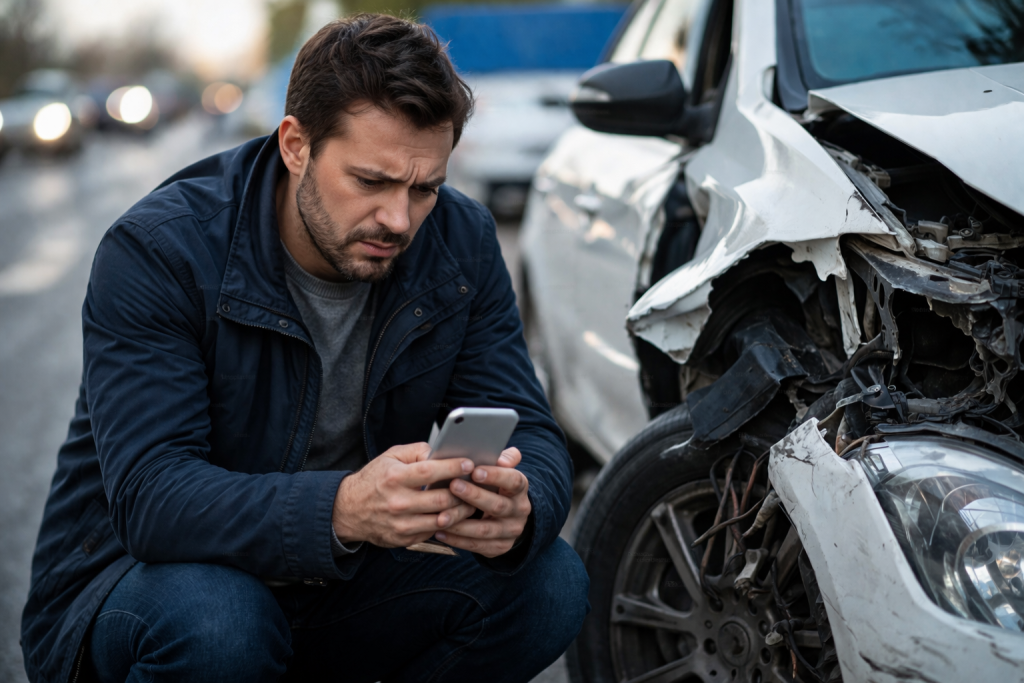
Knowing what to do after a car accident can help you stay safer, protect your passengers, and keep the next steps organized. Safety comes first. After a crash, check for injuries, move to a safe place if possible, call for help if needed, exchange information, document the scene, avoid admitting fault, and contact your insurer when it is safe to do so.
Even a minor accident can feel stressful. A simple car accident checklist can help you focus on the most important steps instead of trying to remember everything in the moment.
What to Do Immediately After a Car Accident
- Stay calm and check for injuries.
- Move to a safe place if possible.
- Call 911 if anyone is injured or the scene is unsafe.
- Turn on hazard lights.
- Do not leave the scene.
- Avoid admitting fault.
- Exchange information.
- Take photos and document the scene.
- Contact your insurer when it is safe to do so.
This order matters because people are more important than paperwork. Once everyone is safe and emergency help has been called if needed, you can begin gathering details for a possible car accident insurance claim.
Check for Injuries and Move to Safety
Safety comes before photos, paperwork, or insurance. Start by checking yourself, your passengers, and anyone else involved. If someone is hurt, confused, trapped, or in distress, call emergency services right away.
If the vehicles are creating a traffic hazard, move them out of the roadway only if it is safe and allowed. Turn on your hazard lights, watch for passing traffic, and avoid standing between vehicles or near active lanes.
Do not stand in a dangerous area just to inspect damage. If you cannot safely get out of the vehicle, remain where you are, keep your seat belt on if appropriate, and wait for help.
Should You Call the Police After a Car Accident?
Many drivers wonder, should I call the police after a car accident? In general, call police or emergency services if there are injuries, if damage appears serious, or if the scene is unsafe.
You should also call if a driver leaves the scene, refuses to share information, appears impaired, threatens you, or disputes what happened. A police report may help document the date, location, people involved, and basic facts of the crash.
Local rules may require reporting certain accidents, especially when injuries, significant damage, or government property are involved. Because requirements vary by location, follow local law and the instructions of responding officers.
What Information Should You Exchange After a Car Accident?
When thinking about what information to exchange after a car accident, focus on facts. Stay calm, avoid arguments, and collect enough detail to identify the drivers, vehicles, insurance policies, and witnesses.
| Information to collect | Why it matters |
|---|---|
| Driver name and contact information | Helps identify and contact the people involved. |
| Insurance company | Helps your insurer or the other driver’s insurer locate coverage information. |
| Policy number if available | May speed up communication with the insurance company. |
| Driver’s license information | Helps verify the driver’s identity. |
| License plate number | Connects the vehicle to the accident. |
| Vehicle make, model, and color | Helps describe each vehicle involved. |
| Photos of insurance card if appropriate | Can reduce mistakes when copying information. |
| Witness names and contact information | May help document what happened. |
| Police report number if available | Helps locate the official report later. |
Do not hand over unnecessary personal information. Share what is needed for the accident, insurance, and legal reporting process.
What Photos Should You Take After a Car Accident?
Photos can help show what happened after a car accident, but they should never put you or anyone else at risk. Take pictures only when it is safe.
- Damage to all vehicles
- License plates
- Wide shots of the accident scene
- Vehicle positions before they are moved, if safe
- Road signs, traffic lights, and lane markings
- Skid marks, debris, and road conditions
- Weather and visibility conditions
- Nearby property damage
- Insurance documents if appropriate
- Injuries only if appropriate and comfortable
Use several angles. Include close-up photos and wider photos that show the surrounding area. If police respond, note the report number or officer information if available.
What Should You Avoid Saying After an Accident?
It is natural to feel shaken, apologetic, or confused after a crash. Still, what not to say after a car accident can be just as important as what you do say.
- Do not admit fault. Avoid statements such as “It was my fault” or “I didn’t see you.”
- Do not argue with the other driver.
- Do not guess or speculate about what happened.
- Do not say “I’m fine” if you are unsure how you feel.
- Do not accept cash on the spot without considering hidden damage or injuries.
- Do not sign documents you do not understand.
- Stick to factual information, such as names, contact details, location, and insurance information.
You can be polite without making assumptions. For example, say, “Let’s exchange information” or “I’m going to document the scene,” instead of debating fault.
When Should You Contact Your Insurance Company?
Contact your insurer when you are safe and have basic information. Follow the instructions in your policy or insurance app, and provide factual details about the crash.
Your insurer may ask for photos, the other driver’s information, witness details, and a police report number if one is available. Do not promise that a claim will be covered, because coverage depends on your policy, the facts of the accident, fault, exclusions, deductibles, and limits.
If you decide to move forward, this dedicated guide explains how to file a car insurance claim step by step.
Should You File an Insurance Claim After a Car Accident?
Whether to file an insurance claim after a car accident depends on the situation. This is not always a simple yes-or-no decision, especially after a minor crash.
Consider these factors:
- Damage amount
- Injuries
- Fault
- Coverage
- Deductible
- Whether another vehicle or property was involved
- Insurer reporting requirements
- Whether hidden damage may exist
Deductibles may apply to certain claims. If you are unsure how that affects your decision, review how car insurance deductibles work before deciding how to proceed.
For example, minor visible damage may still involve sensors, alignment issues, or structural repairs. Vehicle damage may also be handled under different coverages depending on what happened. Learn more about how collision and comprehensive coverage work if you need a broader explanation.
What Happens After You File a Claim?
After a claim is opened, the insurer may review the facts, inspect damage, ask for documents, contact other parties, and explain next steps. The timeline can vary based on the accident, coverage, repair process, and whether more information is needed.
If you are wondering what happens next, this guide explains how long a car insurance claim can take.
What If the Other Driver Leaves or Refuses to Share Information?
If the other driver leaves, do not chase them. Your safety matters more than following another vehicle.
Write down the license plate number if possible. Also note the vehicle’s make, model, color, direction of travel, accident location, and time. Look for witnesses, nearby cameras, or businesses that may have seen the crash.
Call police and document the scene with photos. Then ask your insurer how your policy may apply. If the other driver left the scene, review this guide to hit-and-run insurance coverage for more detail.
What If You Feel Fine After the Accident?
You may feel okay at first and notice symptoms later. Pay attention to pain, dizziness, confusion, numbness, headaches, or any unusual symptoms after the crash.
Seek medical attention if you are injured, unsure, or symptoms appear later. Do not try to diagnose yourself at the scene. Keep records of medical visits, receipts, prescriptions, and accident-related expenses in case they are needed later.
What If a Child Car Seat Was in the Crash?
A child car seat may need replacement after some crashes. Guidance can depend on crash severity, the car seat manufacturer’s instructions, and official safety guidance.
Check the car seat manual before using the seat again. You can also ask your insurer whether car seat replacement may be addressed as part of the claim.
How Insurance Coverage May Apply After an Accident
Insurance coverage can matter after a crash, but the immediate priority is still safety and documentation.
Liability insurance may apply if you caused injuries or property damage to others. Collision coverage may apply to damage to your own car after a crash. Comprehensive usually applies to non-collision damage, not most crashes.
Coverage depends on policy terms, fault, deductibles, exclusions, and limits. If a claim is denied or coverage is unclear, this guide explains common reasons when car insurance may not pay out.
Will Your Insurance Go Up After an Accident?
Some drivers also worry about what a crash could mean for future premiums. A rate change can depend on fault, claim history, insurer rules, state rules, coverage, and other factors.
For more detail, read this guide on whether your insurance may go up after an accident.
Car Accident Checklist
Use this car accident checklist to stay organized at the scene and during the next steps:
- Check for injuries.
- Move to safety if possible.
- Call 911 if needed.
- Turn on hazard lights.
- Exchange information.
- Take photos.
- Get witness information.
- Avoid admitting fault.
- Contact your insurer.
- Save receipts and documents.
- Follow up on the claim or repairs.
Common Mistakes After a Car Accident
Knowing what to do after an accident also means knowing what to avoid. These mistakes can make the situation more stressful:
- Leaving the scene too soon
- Forgetting to exchange information
- Failing to take photos
- Admitting fault before facts are reviewed
- Ignoring possible injuries
- Not reporting the accident when required
- Accepting informal payments too quickly
- Comparing repair costs before understanding deductible and coverage
A calm, organized approach helps you protect yourself without turning the scene into an argument.
What to Do After a Car Accident FAQs
What should I do first after a car accident?
First, check for injuries and move to safety if possible. Call 911 if anyone is hurt, the scene is unsafe, or emergency help is needed. People come before photos, paperwork, or insurance.
Should I call the police after a minor car accident?
You may need to call police after a minor accident depending on local law, damage, injuries, or the behavior of the other driver. Call if there is a dispute, suspected impairment, refusal to exchange information, or any unsafe situation.
What information should I exchange after a car accident?
Exchange names, contact information, insurance company, policy number if available, driver’s license details, license plate number, and vehicle description. Also collect witness information and a police report number if available.
Should I admit fault after a car accident?
No. Do not admit fault or guess about what happened. Stick to facts and let insurers, police, and any other appropriate parties review the information.
Should I take photos after a car accident?
Yes, if it is safe. Take photos of vehicle damage, license plates, the full scene, road signs, traffic signals, skid marks, debris, weather conditions, and nearby property damage.
When should I call my insurance company?
Call your insurer when you are safe and have basic information. Provide factual details, photos, police report information if available, and the other driver’s information.
Should I file a claim if the damage is minor?
It depends on the damage amount, deductible, coverage, fault, hidden damage, and your insurer’s reporting requirements. Minor visible damage can sometimes cost more to repair than expected.
What if the other driver does not have insurance?
Collect the driver’s information, call police if appropriate, document the scene, and contact your insurer. Your own policy may include coverage that applies, but the answer depends on your specific policy and state rules.
What if the other driver leaves the scene?
Do not chase them. Write down the license plate, vehicle description, direction of travel, time, and location if possible. Call police, look for witnesses, take photos, and contact your insurer.
What should I do if I feel pain later?
Seek medical attention if pain, dizziness, confusion, numbness, headaches, or unusual symptoms appear later. Keep records of medical visits and accident-related expenses.
Conclusion
Knowing what to do after a car accident can make a stressful moment easier to manage. Start with safety, check for injuries, and call for help when needed. Then exchange information, document the scene, and avoid admitting fault or guessing about what happened.
When you are safe, contact your insurer and keep records of photos, reports, receipts, and repairs. A calm, organized response can help make the insurance process easier while protecting the people involved.