
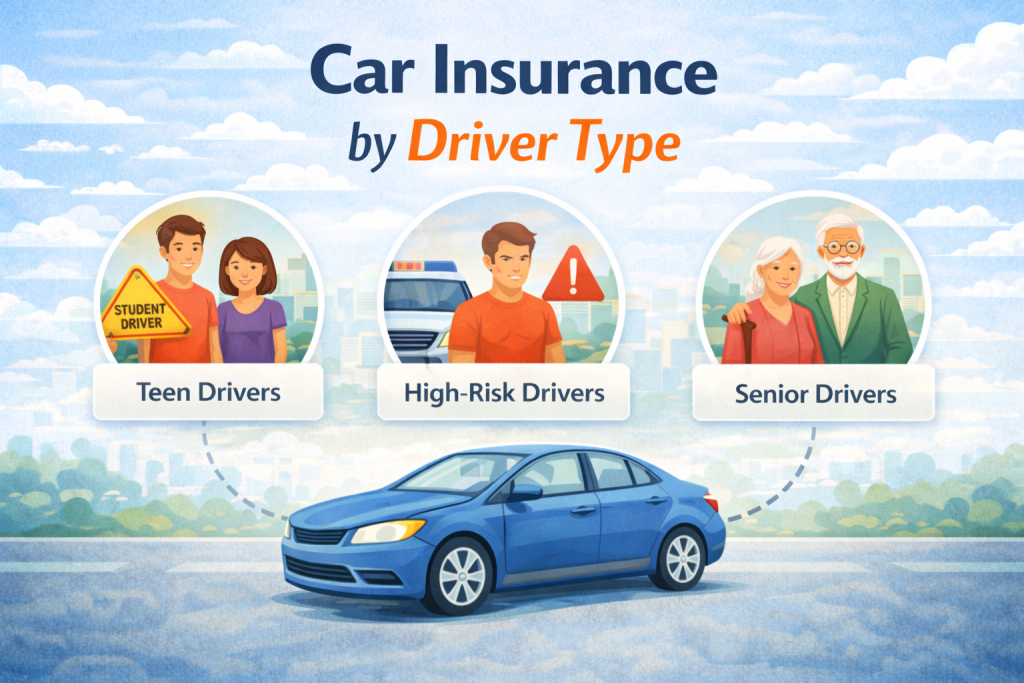
Car insurance is not “one size fits all.” Two people can drive similar cars, live in the same area, and still pay very different prices because insurers mainly price policies around driver risk. That risk is influenced by age, driving experience, driving history, mileage, and even how you use your vehicle day-to-day. The smartest way to buy insurance is to choose coverage based on your driver type—not just on the cheapest price.
This guide breaks down car insurance by driver type and explains what coverage matters most, where people commonly overpay, and how to avoid the mistakes that cause denied claims or surprise costs. You’ll also find a practical comparison table and step-by-step tips for building a policy that makes sense for your situation.
Why Driver Type Matters More Than You Think
Insurance pricing is based on probability. Insurers estimate how likely a driver is to file a claim and how expensive that claim might be. While laws and minimum requirements vary around the world, the logic is similar everywhere: drivers with higher risk profiles usually pay more, and drivers with stronger safety signals can often qualify for discounts.
Choosing coverage by driver type helps you do two things:
- Stay protected where you’re most vulnerable (financially and legally).
- Spend money where it matters instead of paying for add-ons you don’t need.
Quick Coverage Map: The Main Building Blocks
Before we break down driver types, it helps to understand the most common coverage categories:
- Liability (third-party): Pays for injuries and property damage you cause to others.
- Collision: Repairs your car after a crash (often with a deductible).
- Comprehensive: Covers theft, vandalism, fire, storms, falling objects, animal collisions, and similar non-crash events.
- Medical/PIP: Helps pay medical costs after an accident (terms vary by region).
- Uninsured/Underinsured protection: Helps if the at-fault driver has no insurance or not enough insurance.
- Extras: Roadside assistance, rental reimbursement, legal assistance, and other optional add-ons.
Car Insurance by Driver Type (Detailed)
1) New Drivers and Teen Drivers
New drivers typically face higher premiums because they have limited experience and statistically higher accident rates. If you’re a new driver or a parent insuring a teen, the main goal is to balance affordability with realistic protection.
Best coverage focus:
- Strong liability limits: New drivers make mistakes, and liability claims can be expensive.
- Uninsured/underinsured protection: A new driver can be hit by someone else and still face major costs.
- Collision and comprehensive: Important for newer vehicles or financed cars.
Common mistake: buying the minimum legal liability only. That can be risky because minimum limits may not cover a serious accident. Another common mistake is choosing a deductible so high that the driver cannot afford to file a claim.
Smart savings tips: add a safe-driving course discount, good student discounts (where available), choose a modest vehicle, and consider a higher deductible only if you have savings.
2) Young Drivers (Early 20s)
Young drivers often pay high premiums, but many can reduce costs by building a strong insurance profile. Insurers like consistency: stable coverage, clean driving record, and low-risk vehicle choices.
Best coverage focus:
- Liability above minimum: Protect your finances early in life.
- Collision/comprehensive if your car is valuable: Especially if you cannot replace the car easily.
- Medical coverage: Helpful if you have limited health coverage or high deductibles.
Common mistake: switching insurers constantly without comparing identical coverage. Another mistake is ignoring policy exclusions (for example, using a personal policy for paid delivery work).
3) Experienced Drivers With Clean Records
If you have a clean record and years of experience, you are usually in the best position to get good pricing. This is the time to focus not only on saving money but also on protecting your savings and income.
Best coverage focus:
- Higher liability limits: If you have assets, you need stronger protection.
- Uninsured/underinsured protection: Useful in many regions regardless of your own driving skill.
- Collision/comprehensive based on car value: If the car is older, compare the premium to the vehicle’s value.
Smart approach: choose a deductible that matches your emergency fund. If you can comfortably pay the deductible, you can often reduce the premium without weakening protection.
4) High-Mileage Drivers (Commuters, Frequent Travelers)
If you drive a lot, you are exposed to more risk simply because you spend more time on the road. Even safe drivers can have higher claim probability due to mileage.
Best coverage focus:
- Strong liability: More time driving increases the chance of an at-fault incident.
- Collision coverage: More miles means more accident exposure.
- Roadside assistance: Higher mileage often means more breakdown risk.
Common mistake: underreporting mileage. If your mileage is far higher than what you told the insurer, it can cause pricing issues or claim complications. Always be honest about how much you drive.
5) Low-Mileage Drivers
If you drive rarely, you may qualify for low-mileage discounts or usage-based policies in some markets. However, low mileage does not mean zero risk—accidents still happen close to home.
Best coverage focus:
- Liability coverage: Still essential for legal and financial protection.
- Comprehensive coverage: If your vehicle is parked outside or in a theft-prone area, comprehensive can be valuable.
Smart savings tip: ask about pay-per-mile programs where available and consider dropping collision only if your vehicle value is low and you can replace it.
6) Drivers With a Previous Accident or Ticket
A ticket or accident can increase premiums for years depending on local rules and insurer scoring. If you have a violation, the goal is to stay insured continuously and rebuild your record.
Best coverage focus:
- Keep liability strong: Don’t reduce protection because the price increased.
- Choose deductible wisely: Don’t set a deductible you can’t pay.
- Consider a defensive driving course: Some insurers offer discounts after course completion.
Common mistake: letting the policy lapse because it is expensive. Lapses can lead to even higher pricing later. Maintaining continuous coverage can be one of the best long-term cost savers.
7) Drivers Who Use Their Car for Work (Delivery, Rideshare, Business Use)
This is one of the most important driver types because it can create claim problems if misinsured. Many personal car insurance policies do not cover commercial use by default. If you drive for delivery, rideshare, or business, you must check your policy terms carefully.
Best coverage focus:
- Correct usage classification: Make sure your insurer knows how you use the vehicle.
- Higher liability limits: More time on the road and passengers/goods increase risk.
- Collision/comprehensive: Especially important if the car is essential for income.
Common mistake: assuming a personal policy automatically covers paid driving. If the insurer determines the vehicle was used commercially and the policy excludes it, a claim can be denied.
8) Senior Drivers
Many senior drivers have decades of experience, but insurers may still adjust pricing based on age-related factors. The best approach is to focus on clear coverage, easy claims, and practical protections.
Best coverage focus:
- Strong liability: Protect retirement savings and assets.
- Medical coverage: Helpful for recovery costs after an accident.
- Roadside assistance: Convenient and often inexpensive.
Smart tip: Some insurers offer discounts for limited driving or refresher driving courses.
Driver Type Coverage Comparison Table
| Driver Type | Top Priorities | Coverages Often Worth Considering | Common Mistake |
|---|---|---|---|
| New/Teen Drivers | Protection + affordability | Higher liability, collision, comprehensive, UM/UIM | Buying minimum limits only |
| Young Drivers | Build good profile | Higher liability, collision/comprehensive, medical | Comparing unequal quotes |
| Clean Record Drivers | Protect assets | Higher liability, UM/UIM, tailored deductibles | Overpaying for unneeded add-ons |
| High-Mileage | More exposure | Collision, liability, roadside assistance | Underreporting mileage |
| Work/Commercial Use | Avoid claim denial | Correct commercial coverage, higher liability | Using personal policy for paid driving |
| Senior Drivers | Simplicity + protection | Liability, medical coverage, roadside assistance | Reducing coverage too much to save money |
How to Build a Policy That Fits Your Driver Type
A simple way to build a policy is to start with what is legally required where you live, then add coverage based on your vehicle value and personal risk. Use this checklist:
- Start with liability: Choose limits that protect your savings, not just what keeps you legal.
- Protect your car if needed: Add collision/comprehensive if the car is valuable or you rely on it daily.
- Protect against uninsured drivers: UM/UIM can be valuable in many regions.
- Choose a realistic deductible: Pick what you can actually pay on short notice.
- Review your use type: Personal vs work use matters for claim approval.
Frequently Asked Questions
Do insurers really price policies differently by driver type?
Yes. Most insurers use risk models based on driver experience, claim history, mileage, and vehicle use. Driver type is one of the biggest reasons two drivers can pay different prices for similar cars.
Should I always choose the cheapest insurance?
Not always. The cheapest policy might have low limits, major exclusions, or high deductibles. The better goal is best value: enough protection at a fair price.
Can I change my coverage later if my situation changes?
Yes. If you buy a new car, move, start commuting, or begin using your car for work, you should update your policy to match your new driver type.
Final Thoughts
Car insurance works best when it matches your real-world risk. Whether you are a new driver, a commuter, a rideshare driver, or an experienced driver with a clean record, the right combination of coverage can protect your finances and reduce stress after an accident. Focus on strong liability protection, choose realistic deductibles, and make sure your policy reflects how you actually use your vehicle.