
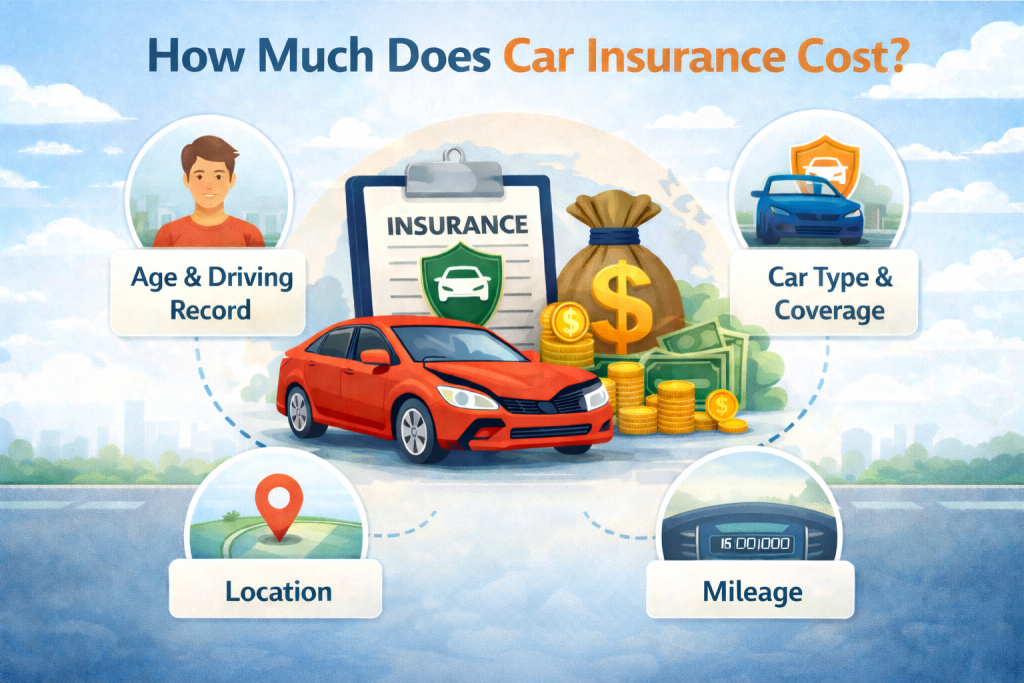
Car insurance cost depends on many factors, which is why two drivers can pay very different prices for similar coverage. Some people pay surprisingly low rates, while others feel like their premiums increase every renewal. The truth is that insurers price policies based on risk, and “risk” is influenced by your driving profile, vehicle, coverage choices, and even where you park and drive.
In this guide, you’ll learn how much car insurance typically costs, what “average” really means, how monthly pricing works, what affects your rate the most, and practical ways to lower your premium without leaving yourself underprotected.
Quick Answer: What Is the Typical Cost of Car Insurance?
The cost of car insurance can range widely because coverage levels and driver profiles vary. A basic liability-only policy may cost much less than a policy that includes collision and comprehensive coverage. In addition, a driver with a clean record often pays less than a driver with tickets, accidents, or a recent claim.
A useful way to think about it is this: there is no single “true average”. Instead, there are ranges that depend on the type of coverage and your situation. When people search for “average car insurance cost,” they usually want a realistic estimate for budgeting—so the goal is to understand the factors that will push your quote higher or lower.
Monthly vs Annual Car Insurance Cost (What Most People Really Pay)
Car insurance is often quoted as a monthly payment, but insurers also price policies as a total cost for the entire policy term. Many policies are billed monthly for convenience, while others are billed in full for six or twelve months.
How Monthly Payments Work
Your “monthly premium” is usually your total premium divided into installments. In some cases, paying monthly can include installment fees or result in a slightly higher total cost compared to paying in full. Not always, but it’s common enough that it’s worth checking.
If you want the most accurate comparison between insurers, compare:
- Total premium for the policy term
- How that total changes based on payment method
- Your deductibles and limits (so you compare equal protection)
Is It Better to Pay Monthly or in Full?
If you can afford it, paying in full may reduce fees and can sometimes lower the total. If not, monthly payments are normal and still allow you to maintain coverage. The most important thing is avoiding missed payments that could cause a coverage lapse.
What Affects Car Insurance Rates the Most?
Insurers calculate your rate based on how likely you are to file a claim and how expensive that claim could be. These are some of the biggest factors.
1) Your Driving History
Your driving record is one of the strongest predictors of risk. Tickets, at-fault accidents, and previous claims can increase your cost. A clean record usually leads to lower premiums over time.
2) Your Age and Driving Experience
New and less experienced drivers typically pay more because they statistically have higher accident rates. Over time, premiums often decrease as you build driving experience—assuming you maintain a good record.
3) Your Location
Where you live matters because claims frequency and repair costs can vary by area. Higher traffic density, theft risk, and local repair costs can push premiums up. Even moving a short distance can change your insurance cost.
4) Your Vehicle (Make, Model, and Repair Cost)
Some cars cost more to insure because they are expensive to repair, more likely to be stolen, or have higher claim rates. Vehicles with advanced technology can also increase repair costs, which affects premiums.
5) Coverage Types You Choose
Liability-only coverage is usually cheaper than a policy that includes collision and comprehensive. Adding coverage increases your premium, but it also reduces your financial risk after a loss.
6) Your Coverage Limits
Higher limits generally increase cost because the insurer may pay more in a serious claim. However, higher limits often provide better financial protection, especially for liability coverage. Minimum limits may be affordable, but they can leave you exposed if a serious accident occurs.
7) Your Deductibles
A deductible is what you pay out of pocket before insurance pays (commonly for collision and comprehensive). Choosing a higher deductible often reduces your premium, but increases your out-of-pocket cost when you file a claim. The best deductible is one you can comfortably afford in an emergency.
8) How Much You Drive
Mileage and vehicle use can influence pricing. The more you drive, the more exposure you have to accidents. Some insurers price differently for commuting, business use, or occasional driving.
9) Your Claims History
Insurers look at how often you’ve filed claims. Even if a claim was not your fault, frequent claims can affect pricing because they indicate higher expected costs.
How Much Does Car Insurance Cost Per Month?
Many drivers specifically want a monthly estimate for budgeting. Monthly cost depends on your coverage level and billing schedule, but here’s a practical way to think about it:
- Liability-only policies are usually the lowest-cost option.
- Full coverage policies (often meaning liability + collision + comprehensive) typically cost more.
- Higher limits and lower deductibles generally increase the monthly payment.
If you want a more accurate estimate, the best approach is to get multiple quotes using the same coverage limits and deductibles. Otherwise, it’s easy to compare a “cheap” quote that offers less protection to a more expensive quote that includes broader coverage.
Why Is Car Insurance So Expensive for Some Drivers?
If your premium feels high, it usually comes down to risk and cost. Common reasons include:
- High-risk driver profile (new driver, accidents, tickets)
- Expensive vehicle repairs or high theft risk
- High traffic density and frequent claims in your area
- Higher coverage choices (limits, collision, comprehensive)
- Recent claims or lapses in coverage
The key is to identify which factors you can control and which you can’t. You can’t change your age or local traffic overnight, but you can choose deductibles, review limits, compare insurers, and improve driving habits over time.
What You Should Not Do to Save Money
Some “savings” strategies can backfire. Be cautious with:
- Choosing minimum limits just to lower premium (serious accidents can exceed minimums quickly)
- Dropping essential coverage while still depending heavily on your car
- Selecting a deductible you cannot realistically afford
Saving money is important, but insurance is ultimately about financial protection. The best policy is not the cheapest—it’s the one that protects you from costs you would struggle to pay yourself.
How to Get an Accurate Estimate for Your Situation
To estimate your car insurance cost more accurately, gather these details:
- Vehicle information (make, model, year)
- Your driving history (tickets, accidents, claims)
- How you use the vehicle (commuting, occasional driving)
- Your preferred deductibles and liability limits
Then request multiple quotes with the same coverage structure. That gives you a realistic range and helps you spot outliers that may indicate missing coverage.
Conclusion: How Much Does Car Insurance Cost?
Car insurance cost varies because insurers price policies based on risk and expected claim cost. Your premium depends on your driving history, vehicle, location, coverage choices, deductibles, and limits. The best way to manage cost is to understand which factors you can control, compare quotes using equal coverage, and choose a policy that balances affordability with meaningful protection.
If you focus on the fundamentals—strong liability limits, sensible deductibles, and coverage that matches your vehicle’s value—you’ll be able to find a policy that fits your budget while still protecting you from expensive surprises.