
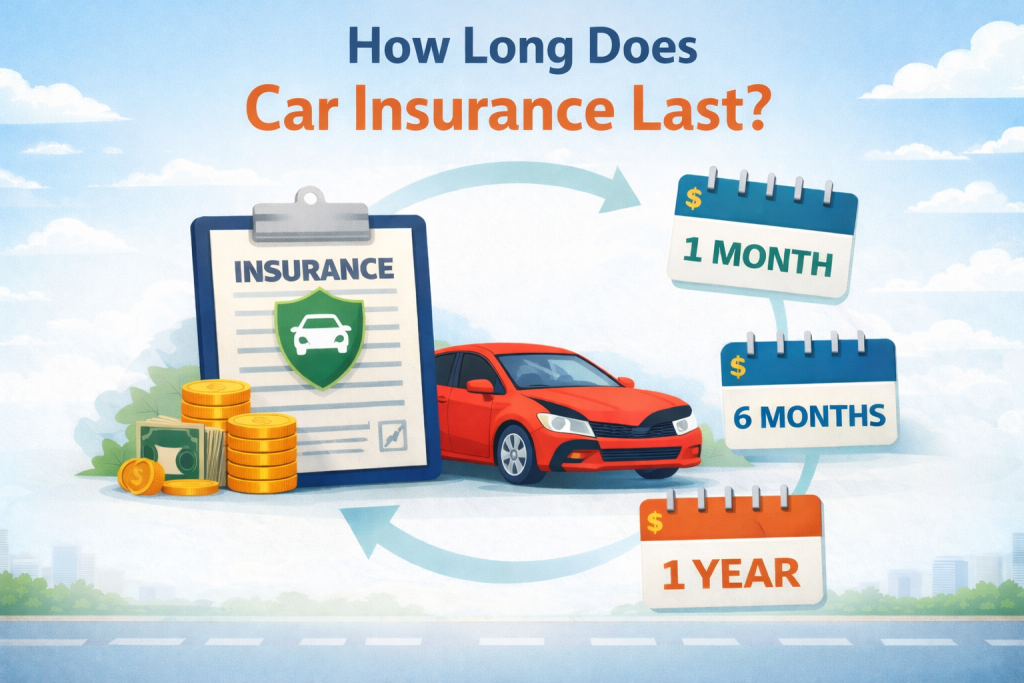
How long car insurance lasts depends on your policy term. A policy term is the length of time your insurance contract is active before it expires or renews. Many drivers assume car insurance “lasts forever” as long as they keep paying, but the reality is that insurance coverage operates in defined time periods. Understanding your policy term helps you avoid coverage gaps, missed renewals, and unpleasant surprises if you ever need to file a claim.
In this guide, you’ll learn how long a car insurance policy lasts, the most common policy term lengths, how renewals work, what happens when a policy expires, and how to avoid a lapse in coverage.
What Is a Car Insurance Policy Term?
A policy term is the official start and end date of your insurance contract. During this period, your coverages are active as long as your policy remains in good standing (meaning you follow the policy terms and pay premiums when due).
Your policy term is listed on your declarations page (often called the “dec page”). It typically shows:
- Policy effective date (when coverage starts)
- Policy expiration date (when the term ends)
- Selected coverages, limits, and deductibles
Even if you pay monthly, your policy term still has an official end date. Monthly payments are simply a billing schedule.
Common Car Insurance Policy Term Lengths
Car insurance policy terms vary by insurer, but there are a few common lengths:
6-Month Policy Term
A six-month policy is one of the most common term lengths. With a six-month term, the insurer reviews your policy twice a year. This can allow rates to adjust more frequently based on changes in risk factors.
A 6-month term can be helpful if:
- Your circumstances change often (vehicle, address, drivers)
- You want regular opportunities to shop around
- You expect your rates may improve after a clean period of driving
12-Month Policy Term
A twelve-month policy is also common. With a 12-month term, your policy is set for a full year before renewal. Many drivers like annual terms because they can feel more stable and easier to manage.
A 12-month term can be convenient if:
- You prefer fewer renewal cycles
- Your situation is stable
- You like to plan coverage annually
Other Term Lengths (Less Common)
Some insurers may offer other term structures, but 6-month and 12-month terms are the most typical. If you’re unsure, check your declarations page to confirm your specific term dates.
Does Car Insurance Last as Long as You Keep Paying?
In practice, your insurance stays active as long as:
- Your policy term has not ended, or it has been renewed
- You pay your premium on time
- You follow policy conditions and provide accurate information
However, paying monthly does not mean your policy has no end date. It means your insurer allows you to pay the total cost of the term in installments. Your policy can still expire, be canceled, or be non-renewed depending on the situation.
How Car Insurance Renewals Work
When your policy term ends, your insurance company usually offers a renewal. A renewal is a new policy term that continues coverage, often with updated pricing based on current factors.
Before renewal, you may receive a renewal notice that includes:
- Your new premium (or any changes in cost)
- Policy updates or changes in terms
- Renewal dates and payment due dates
If you accept the renewal and pay as required, your coverage continues into the next term. If you do nothing, your coverage may end at the expiration date, depending on the insurer’s renewal process and local rules.
Can an Insurer Change Your Rate at Renewal?
Yes, rates can change at renewal. This is one reason policy terms matter: the renewal is a natural point where pricing can be recalculated. Rate changes can happen due to:
- Claims or accidents
- Tickets or driving violations
- Changes in vehicle value or repair costs
- Changes in risk factors in your area
- General pricing adjustments by the insurer
This does not automatically mean you did something wrong. Insurance pricing is influenced by many broad factors, including the cost of claims overall.
What Happens If Your Car Insurance Policy Expires?
If your policy expires and is not renewed, you may experience a lapse in coverage. A lapse means you are uninsured for a period of time. This can be risky for several reasons:
- You may be driving illegally if insurance is required
- You are financially exposed if an accident occurs
- A lapse can increase future premiums
- It may complicate vehicle registration rules (depending on local systems)
Even if your car is parked and not being driven, a lapse may still create problems if the vehicle remains registered for road use. The safest approach is to avoid lapses whenever possible.
Is There a Grace Period If You Miss a Payment?
Some insurers provide a grace period for late payments, but this depends on the insurer, your billing schedule, and local rules. A grace period is a short window after a payment due date during which you may still pay without losing coverage.
Important: you should never assume you have a grace period. Always check your policy documents or billing notices. If you miss a payment, the safest move is to pay as soon as possible and confirm your coverage status.
Cancellation vs Expiration vs Non-Renewal
These terms sound similar but mean different things:
Expiration
Your policy expires when the term ends and it is not renewed.
Cancellation
A policy is canceled when coverage ends before the policy term is over. Cancellation can happen due to non-payment or other reasons listed in the policy. Some drivers also cancel voluntarily if switching insurers.
Non-Renewal
Non-renewal means the insurer chooses not to offer a new term at the end of your current policy term. This does not necessarily mean you did anything wrong, but it can happen due to underwriting changes, risk factors, or claims history, depending on the insurer’s rules.
How to Avoid a Lapse in Coverage
Avoiding a lapse is one of the best things you can do for long-term insurance affordability and peace of mind. Here are practical steps:
- Set up automatic payments if available
- Track your policy renewal dates
- Update your contact information so you receive notices
- If switching insurers, ensure the new policy starts before the old one ends
- Review your policy term at least once per year
A lapse can happen easily if you move, change banks, or miss a renewal notice. Building simple habits around renewal dates helps prevent this problem.
Can You Change Coverage During the Policy Term?
In many cases, you can update certain parts of your policy during the term. For example, you may be able to:
- Add or remove a vehicle
- Add or remove drivers (depending on rules)
- Adjust deductibles or coverage limits (availability varies)
- Update address or usage information
However, some changes may impact your premium immediately. Any time you make changes, review the updated declarations page to confirm what changed and how it affects your costs and protection.
How Long Does Car Insurance Last If You Pay Annually?
If you pay annually, you are generally paying the premium for the entire policy term upfront. Your coverage still lasts only for the policy term dates listed in your contract. Annual payment can reduce the risk of missed monthly payments, but it does not eliminate the need to renew the policy when the term ends.
Conclusion: How Long Does Car Insurance Last?
Car insurance lasts for the length of your policy term, which is commonly six months or twelve months. As long as your policy is active, premiums are paid on time, and the policy is renewed when the term ends, your coverage continues. If a policy expires or is canceled, you may experience a lapse in coverage, which can create legal and financial risks.
To stay protected, keep track of your term dates, review renewal notices carefully, and avoid gaps when switching insurers. A small lapse can cause big problems—so maintaining continuous coverage is usually the smartest approach.